Crude Oil Trading Mistakes
Eight mistakes that end oil accounts, why the sizing one costs more than the rest, and how to make each impossible.
 Rayner6 min read13 September 2026
Crude oil trading mistakes are rarely analysis mistakes. Oil respects round numbers, it has a readable weekly rhythm, and the chart is no harder than any other market. People read it correctly and still lose several times what they intended.
The reason is the contract. One standard lot is 1 000 barrels, so a single dollar of movement is a thousand dollars, and stops are wide in absolute terms. This page lists the eight mistakes that actually end accounts, roughly in order of what they cost, with the fix for each.
The most expensive crude oil trading mistake is carrying a forex lot size across to WTI, because one standard oil lot is 1 000 barrels and a stop is usually 1.50 dollars. Everything else is smaller: no stop, trading through the inventory release, holding over a weekend at full size, and trading the Asian session.
1. Using a forex lot size on oil
The one that costs more than everything else combined. One standard WTI lot is 1 000 barrels, so a one dollar move is 1 000 dollars.
| Trade | Lot size | Stop | Actual risk |
|---|---|---|---|
| EURUSD | 0.10 | 30 pips | About 30 dollars |
| WTI | 0.10 | 1.50 dollars | 150 dollars |
Nothing on the screen tells you this. The lot field looks identical and the position behaves completely differently.
The fix. Never type a lot size from memory on oil. Calculate from the stop distance every time with the lot size calculator. The arithmetic is in crude oil pip value and lot size.
2. Trading oil without a stop
On an instrument that moves several dollars on a single supply headline, a position with no stop has no defined loss. One overnight hold through an OPEC statement can cost more than a good month made.
The fix. Set the stop in the same action that opens the trade. Not afterwards, not once the trade is green.
3. Trading through the inventory release
Wednesday at 15:30 sits in the middle of the only session worth trading, so this happens by accident more often than by choice. The spread widens past 50 cents and a stop fills at the next available price.
The fix. Stand aside from 15:20 and trade the level that holds afterwards. Detail in how to trade the EIA inventory report.
4. Carrying full size over a weekend
Oil closes Friday and reopens Sunday, and more of what moves oil happens outside market hours than for a currency pair. OPEC statements and supply disruptions both like weekends.
The fix. Halve anything you carry into Friday’s close. A wider stop does not help, because a stop inside a gap fills at the first available price rather than its own.
5. Copying a stop distance from another market
A 40 cent stop on oil is inside ordinary noise. The level holds, the direction is right, and the trade closes for a loss anyway.
The fix. Take the stop from the signal, or set it near half the daily ATR. Never pick a round number because it looks tidy.
6. Trading the Asian session
Oil is open and barely moving, with the widest spread of the day on most brokers. You are paying more to access less range.

The fix. Trade 14:30 to 19:00 UK time. Full detail in crude oil trading hours.
7. Mixing up the benchmark
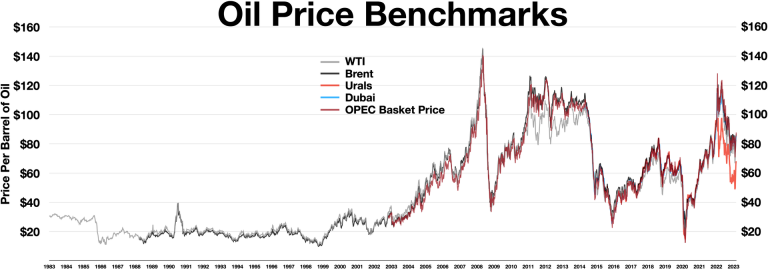
A level published on Brent marked on a WTI chart sits several dollars away. It looks like the signal was wrong, and the signal was fine.
The fix. Confirm the symbol before every trade. USOIL, WTI and CL usually mean WTI, while UKOIL and BCO are Brent. Covered in WTI vs Brent.
8. Increasing size to recover a loss
Present in almost every blown account, in every market. On oil it works faster, because the multiplier means a doubled position is very large.
The fix. A fixed percentage per trade, applied to every trade regardless of how the last one went. The reasoning is in how much to risk per signal.
Turning the list into rules
None of these are fixed by discipline, because discipline fails exactly when it is needed. They are fixed by rules written down before the session.
- 01Calculate the lot size from the stop distance, every trade, no exceptions.
- 02Stop goes on with the entry, and only ever moves towards profit.
- 03One percent per trade, whatever happened on the last one.
- 04Trade 14:30 to 19:00 UK time, and stand aside from 15:20 on Wednesday.
- 05Halve or close anything carried into Friday’s close.
Five lines, no judgement required in the moment, which is the point.
Keep reading
- Crude oil pip value and lot size the arithmetic behind mistake one
- How to trade the EIA inventory report what Wednesday does to a position
- Crude oil trading hours the five hours worth trading
- WTI vs Brent making sure the level is on the right instrument
Frequently Asked Questions
What is the biggest mistake in oil trading?
Using a lot size carried over from forex. One standard WTI lot is 1 000 barrels, so 0.10 lots with a 1.50 dollar stop risks 150 dollars where the same lot size on EURUSD risks about 30.
Why do I keep losing on oil even when I am right?
Usually the stop is too tight. A 40 cent stop sits inside oil’s ordinary overshoot, so a whole dollar level can hold and the trade still closes for a loss.
Can you trade oil without a stop loss?
You can place the order and you should not. Oil moves several dollars on a single supply headline, so a position with no stop has no defined loss at all.
Should I hold oil over the weekend?
Halve it at minimum. More of what moves oil happens outside market hours than for a currency pair, and a stop inside a Sunday gap fills at the first available price.
Why should I avoid trading oil at night?
Because the Asian session has the narrowest range and the widest spread of the day. You are paying more to access less movement.
Why did my oil level not work?
Frequently because the level came from the other benchmark. WTI and Brent trade several dollars apart, so a Brent level marked on a WTI chart is in the wrong place entirely.
How do I stop making these mistakes?
Write the rules down before the session rather than relying on judgement in the moment. Calculate every lot size, set the stop with the entry, fix the risk percentage, trade the liquid hours, and halve anything held over a weekend.